
Transport type
Oversized Vehicle Transport
Transport for lifted trucks, duallies, and big SUVs, priced by the deck space and weight they actually take, not a flat car rate that ignores the difference.
Live carrier rates · ~30 seconds
Get your locked quote
- Route
- Vehicle
- Date & contact
Prefer a human? Call (917) 594-5566. A coordinator answers.
- +40%
- up to, over a sedan
- $1,000
- oversized from
- 7–10
- days coast to coast
- 14 days
- price lock
The short answer
Oversized vehicle transport ships lifted trucks, dually pickups, and large SUVs that take up more deck space and weight than a sedan. Broadway prices them by height, length, and weight, from $1,000 on a typical open lane, running up to 40% above a standard car rate, with $0 due until dispatch.
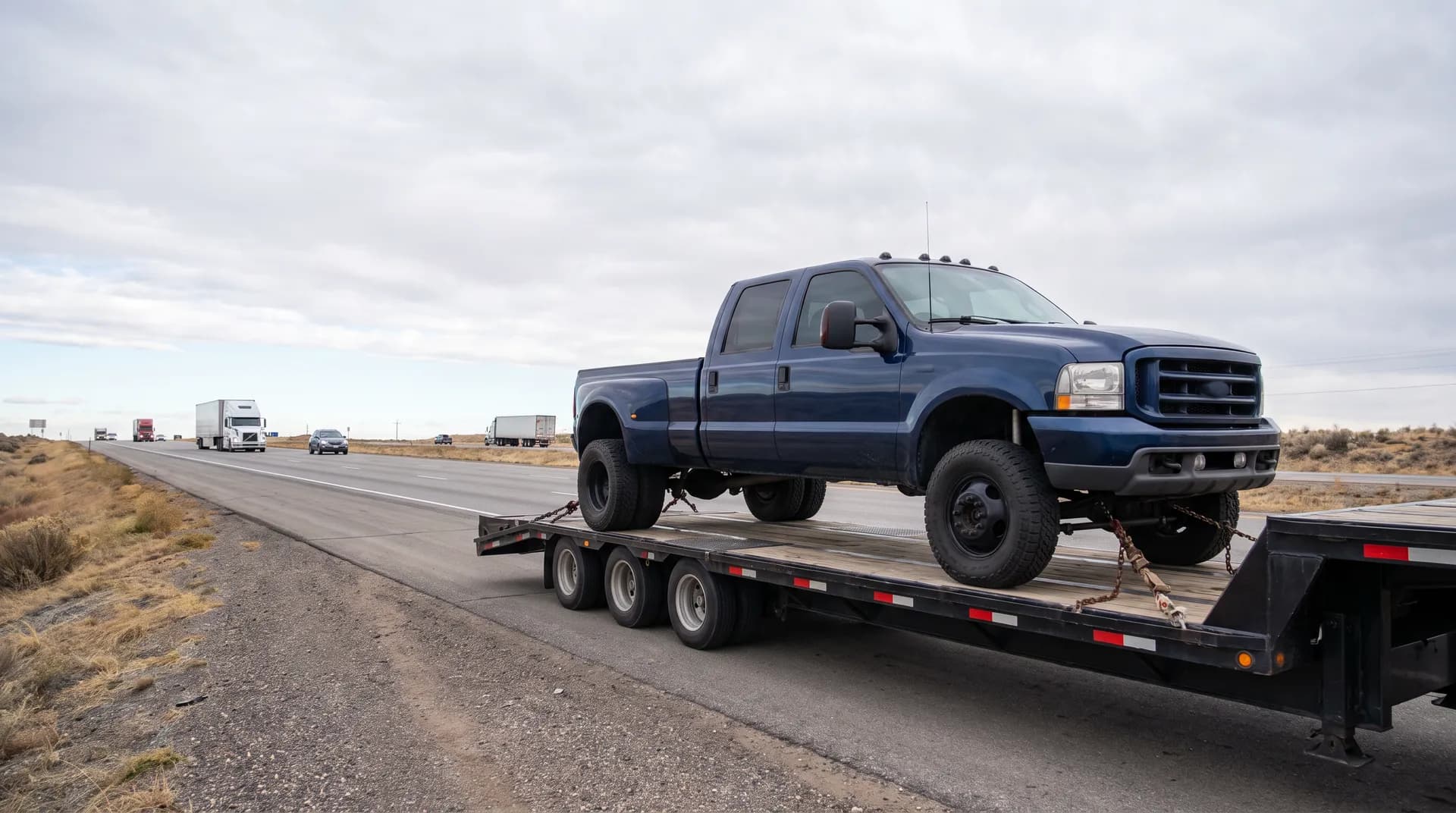
An oversized vehicle takes more of a carrier than a standard car does, in two ways that both cost money. First is deck space: a lifted truck, a dually, or a full-size SUV can occupy more than one car slot on a trailer, so the carrier moves fewer vehicles per load and prices accordingly. Second is weight, which counts against the trailer's total legal capacity, so a heavy truck uses up allowance that would otherwise carry another car. This is why a genuine 4x4 on 35s or a one-ton dually does not ship at the same rate as a sedan, and why an honest quote asks for its actual dimensions rather than guessing from the make.
The complication worth knowing is that oversized is a spectrum, not a category. A mildly lifted half-ton is close to a standard truck, while a heavily built rig with a roof rack, light bar, and oversized tires can push the limits of what a standard open carrier handles at all. Past a certain height, length, or weight, a vehicle needs a specialized carrier or even a flatbed with permits, which is different work at a different price. Give us the real measurements up front and we quote the right equipment the first time, instead of sending a truck that cannot legally or physically take the load.
What it costs
What oversized vehicle transport costs
Oversized transport is the standard open rate for your lane plus a premium for the extra space and weight, up to about 40% for a big rig. These are working figures for a lifted truck on a 1,000-mile open lane:
Open carrier · 1,000-mile lane · lifted truck
A standard open sedan runs about $750 to $1,000 on a 1,000-mile lane, and oversized adds up to 40% for the deck space and weight, so a lifted truck lands roughly $1,000 to $1,700, with $1,200 typical. The exact figure depends on real dimensions, so measurements sharpen it. It is a planning range, not a quote, and holds 14 days.
What moves the number
- Distance, longer = lower per-mile
- $0.75–1.00/mi
- Sedan → XL truck or dually
- up to +40%
- Extra height or weight
- raises rate
- Peak season (Oct–Nov, Mar–Apr)
- ±20%
Very tall, long, or heavy vehicles can exceed what a standard open carrier handles and need a specialized rig, which sits above this band. We quote those directly from your measurements.
Your exact number takes about 30 seconds and no payment details.
See my priceLocked 14 days · $0 until dispatch
Space and weight
Why do bigger vehicles cost more to ship?
Carriers sell two things that oversized vehicles use more of: deck space and weight allowance. A car hauler has a fixed number of slots and a fixed legal weight limit, and a lifted truck or dually eats into both. Where a sedan fits neatly in one slot, a tall or long rig can block part of the slot above or beside it, so the carrier physically cannot load as many vehicles and has to make that up in the rate. Weight works the same way: every trailer has a ceiling, and a heavy one-ton truck spends allowance a lighter car would leave for the next vehicle. The premium is not a penalty, it is the carrier being paid for the capacity your vehicle actually consumes.
That is also why an accurate quote needs real numbers, not just a model name. Two trucks of the same badge can differ by a foot of height and a thousand pounds once one has a lift, 37s, a rack, and a bumper. The height matters for clearance under the upper deck, the length and width for how the vehicle fits among others, and the weight for the trailer's legal limit. Give us those figures and the quote reflects the actual vehicle. Guess low, and the rate can change when the driver sees what is really in the driveway, which helps no one.
Standard car
- Deck space
- One slot
- Weight
- Within norm
- Price basis
- Standard rate
- Loading
- Standard ramps
- Best info to give
- Make and model
Oversized / lifted
- Deck space
- More than one slot
- Weight
- Counts vs trailer cap
- Price basis
- Up to +40%
- Loading
- May need clearance
- Best info to give
- Height, length, weight
What we measure
What measurements decide an oversized quote?
Three numbers do most of the work: height, length, and weight. Height is the one people forget, because it is measured to the very top of the vehicle as it sits, including a lift, a roof rack, a light bar, antennas, or anything bolted up there, and it decides whether the truck clears the upper deck of a car hauler. Length and width decide how the vehicle fits alongside others and whether it blocks adjacent slots. Weight decides how much of the trailer's legal capacity it uses. Get those three right and a carrier can tell you immediately whether a standard open trailer works or the job needs a specialized rig.
The reason we push for accuracy is that oversized is exactly where vague quotes go wrong. A rate built on a stock truck falls apart when the actual vehicle is six inches taller and a half-ton heavier, and the correction happens at the worst possible moment, on pickup day with the driver standing there. Measuring takes five minutes with a tape and the vehicle's door-jamb or title weight. It is the single most useful thing you can do to make an oversized quote hold, and it is why we ask for it up front rather than after a carrier is already rolling toward you.
up to, for size
over a standard car
the one forgotten
measured to the very top
numbers to give
height, length, weight
Before you ship
What to measure before shipping an oversized vehicle
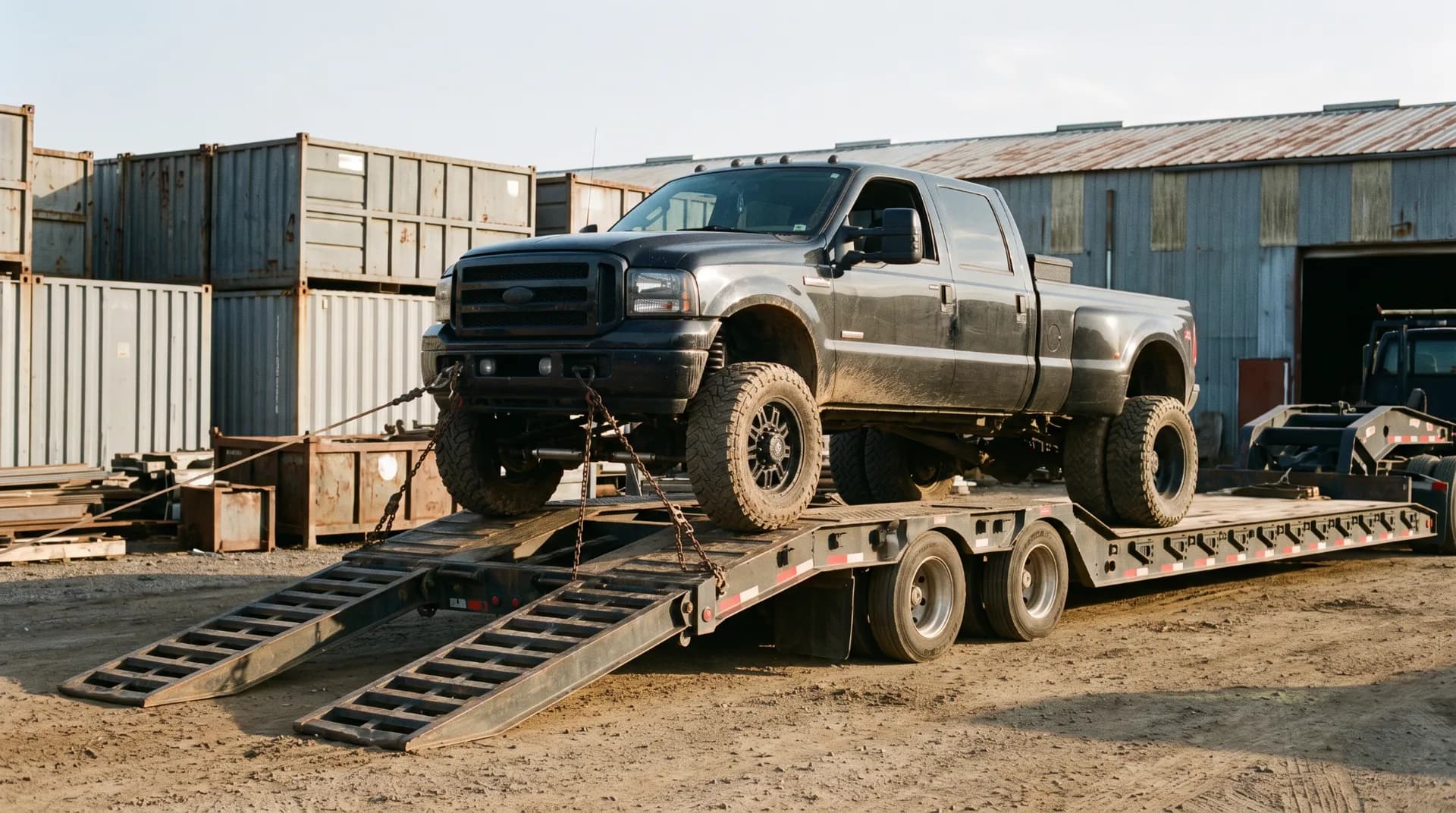
Measuring your vehicle correctly is what keeps an oversized quote from moving. Take the total height to the highest fixed point, with any lift, rack, or light bar included, because that is what a carrier checks against deck clearance. Take the length and note the curb or title weight, adding bed caps, bumpers, or winches that change either. And call out anything past a normal truck footprint, duallies, oversized tires, flares, or a flatbed conversion, since those affect how the vehicle sits among others on the trailer. Accurate numbers here are the difference between a quote that holds and one that gets corrected at the curb.
Broadway matches the equipment to the real vehicle. We take your measurements, assign an open carrier with the deck space and weight allowance your truck needs, or a specialized rig if it exceeds standard limits, and send the cargo certificate before pickup. Door-to-door is included, though a very large vehicle may need a slightly wider meeting spot, which we sort in advance. If your measurements show the vehicle is beyond a standard carrier, we tell you and quote the right equipment rather than send a truck that has to turn around. The measurements protect your price and your pickup day both.
- Give the total height with any lift, rack, or light bar, in inches.
- Give the length and curb weight, including bed caps or heavy bumpers.
- Flag duallies, wide tires, or anything past a standard truck footprint.
Accurate height and weight prevent a repriced or turned-away load on pickup day.
Is it right for you
The honest version of this decision
Book it when
- You're moving a lifted truck, dually, or full-size SUV
- The vehicle takes more than a standard car's deck space or weight
- You're relocating and driving a big rig cross-country makes no sense
- You bought an oversized truck online and need it delivered
Don't bother when
- It's a standard truck within normal dimensions, which ships at the regular rate
- The vehicle is so large it needs a permitted flatbed or heavy-haul rig
- A short local move makes driving it yourself simpler
- You haven't measured it yet, so any quote would only be a guess
A standard pickup within normal dimensions? It ships at the regular rate, see open auto transport.
How it runs
What an oversized booking looks like end to end
- 01
Send your measurements
Give the total height, length, and weight, with any lift, rack, or oversized tires noted. Those numbers decide whether a standard open carrier works or the job needs a specialized rig.
- 02
We match the right carrier
We assign a carrier with the deck space and weight allowance your vehicle needs, verify the cargo policy, and send the certificate before pickup. You pay nothing until that carrier is dispatched.
- 03
Load with clearance checked
The driver confirms the vehicle clears the deck and fits the slot, loads and secures it at the proper points, and photographs it. Door-to-door is included, with a wider meeting spot arranged if needed.
- 04
Inspect and deliver
Your coordinator texts status on request, and the vehicle is unloaded and inspected the same way at delivery. You check and sign the Bill of Lading at each end.
Questions
Oversized Vehicle Transport: common questions
Still stuck? A coordinator answers the phone Mon–Sat, 9am–7pm ET.
How much does it cost to ship an oversized vehicle?
A lifted truck on a 1,000-mile open lane typically lands around $1,200, from $1,000 on shorter lanes, running up to 40% above a standard car rate for the extra deck space and weight. The exact figure depends on real height, length, and weight, so measurements sharpen it. Your price locks for 14 days.
What counts as an oversized vehicle?
Anything that takes more deck space or weight than a standard car: lifted trucks, dually pickups, full-size and three-row SUVs, and vehicles with racks, oversized tires, or bumpers that add height or length. A stock half-ton is usually close to standard, while a built 4x4 clearly is not. Your measurements settle which side yours is on.
Why do lifted trucks and duallies cost more to ship?
Because they use more of what a carrier sells. A tall or wide rig can block part of an adjacent slot, so the trailer carries fewer vehicles, and a heavy truck spends more of the trailer's legal weight limit. The premium pays for the capacity your vehicle consumes, not a penalty for owning a big truck.
What measurements do you need for a quote?
Three: total height to the highest fixed point including any lift, rack, or light bar, the overall length, and the curb or title weight. Those decide deck clearance, how the vehicle fits among others, and the trailer's weight limit. Accurate numbers keep the quote from changing when the driver sees the actual vehicle.
Can you ship a very tall or heavy vehicle?
Yes, though past a certain height, length, or weight it moves on a specialized carrier or a permitted flatbed rather than a standard open trailer, at a higher rate. Send the real measurements and we tell you which equipment it needs and quote it directly, instead of sending a standard truck that cannot take the load.
Should I ship a lifted truck open or enclosed?
Open is standard and fine for the vast majority of trucks, since they are built for weather. Enclosed exists if the truck is a show build or high-value custom worth protecting from road grit, but it costs 30 to 50% more and the enclosed fleet is smaller. For most oversized vehicles, open is the sensible choice.
Do I need to remove a roof rack or accessories?
Not usually, but you must include them in the height measurement, because clearance under the upper deck is what matters. If a rack, light bar, or antenna makes the vehicle too tall for a standard carrier, removing it can bring the truck back within normal limits and lower the rate. Tell us and we will advise.
Ready to ship? See your pickup trucks & oversized price now
- Price locked 14 days
- $0 until a carrier is assigned
- One coordinator, direct line
or call (917) 594-5566. A person answers.