
Transport type
Cross-Country Car Shipping
Coast-to-coast car shipping in about 7 to 10 days, and the honest math on why the per-mile rate falls the farther your car travels.
Live carrier rates · ~30 seconds
Get your locked quote
- Route
- Vehicle
- Date & contact
Prefer a human? Call (917) 594-5566. A coordinator answers.
- $0.75/mi
- 1,500+ mile rate
- 7–10
- days, coast to coast
- ~500 mi
- driven per day
- 14 days
- price lock
The short answer
Cross-country car shipping moves your vehicle coast to coast, roughly 2,800 miles, in about 7 to 10 days on an open carrier. The per-mile rate drops as distance grows, from $1.00 to $1.50 on short hauls down to $0.50 to $0.75 past 1,500 miles, so a typical coast-to-coast open move runs about $1,500 to $2,500.
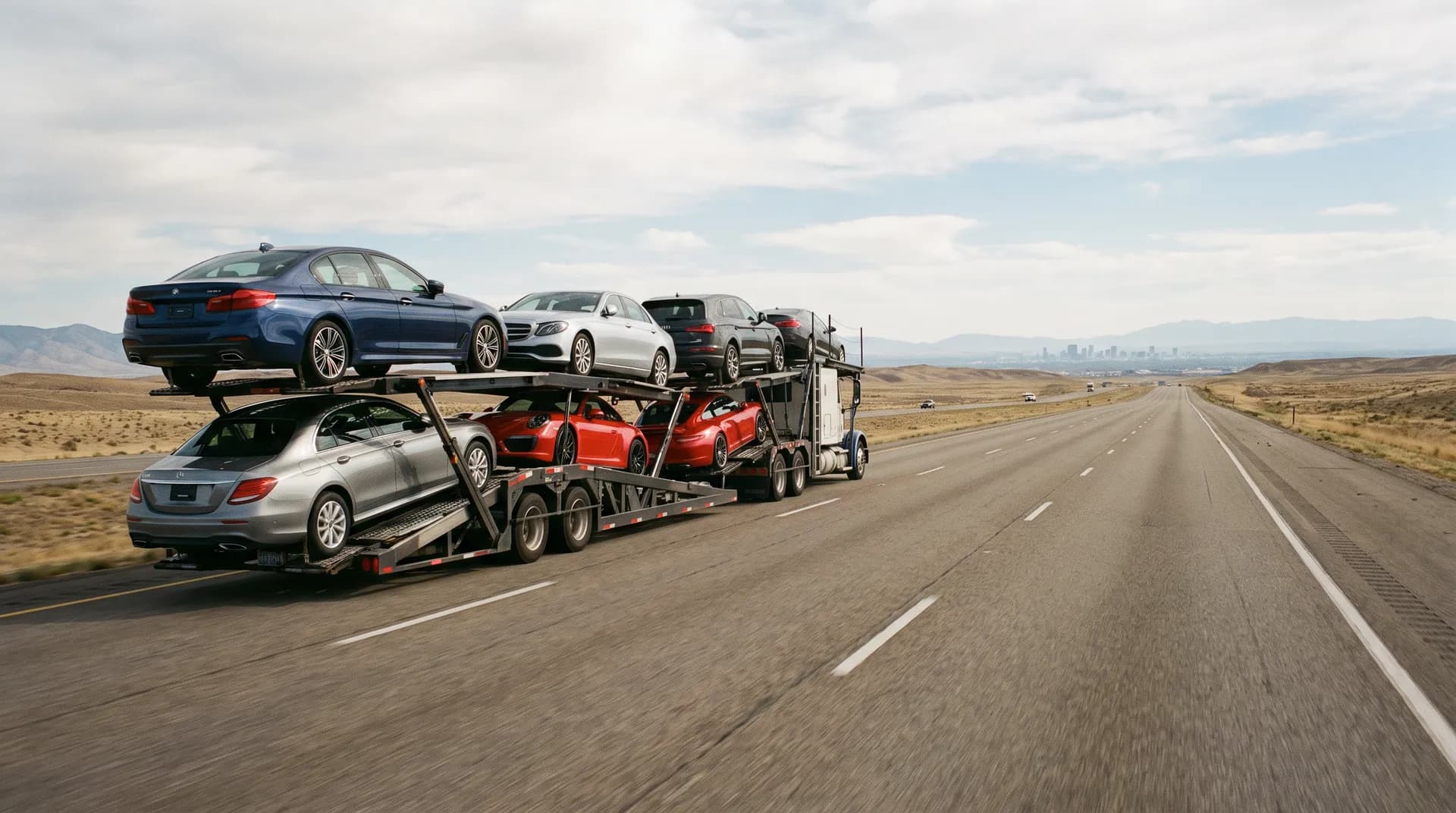
Cross-country car shipping is long-haul open transport, the same multi-level carriers that move cars everywhere, running a coast-to-coast lane of roughly 2,800 miles. Your car is loaded alongside 9 or 10 others, and the driver covers about 500 miles a day while picking up and dropping off other vehicles along the route. A New York to Los Angeles or New York to Seattle move lands in about 7 to 10 days. Because these long lanes run constantly between major metros, there are plenty of trucks to choose from, which is part of why the per-mile rate sits at its lowest over these distances. It is the workhorse move of the whole industry.
The honest part is that a cross-country move is a window, not a calendar date. Weather across several states, the driver's other stops, and mandatory rest breaks all shape the exact arrival, so 7 to 10 days is a realistic range rather than a promise of day seven. The per-mile rate falls as distance grows, but the total is still the largest of any move simply because there are so many miles. And a full week on the highway means a full week of road grit on an open deck, which is worth weighing if the car is valuable. None of this is hidden. Your coordinator gives you the real window for your lane before you book.
What it costs
What cross-country car shipping costs
Cross-country pricing is where the per-mile rate matters most, because it drops over long distances even as the total rises. These are open-carrier figures for a coast-to-coast sedan, roughly 2,800 miles:
Open carrier · ~2,800-mile coast-to-coast lane · sedan
Past 1,500 miles, open rates run $0.50 to $0.75 a mile, so a 2,800-mile sedan lands roughly $1,500 to $2,500, with $1,950 typical. That matches our live routes, New York to Los Angeles at $1,516 to $2,478 and New York to Seattle at $1,600 to $2,300. It is a planning range, not a quote, and your locked price holds 14 days.
What moves the number
- Distance, longer = lower per-mile
- $0.75–1.00/mi
- Peak season (Oct–Nov, Mar–Apr)
- ±20%
- Sedan → XL truck or SUV
- up to +40%
- Open vs enclosed, same lane
- +30–50%
Cross-country is a range, not a date. Long lanes have plenty of trucks between big metros, but a thin origin or destination can still add a day or two before pickup.
Your exact number takes about 30 seconds and no payment details.
See my priceLocked 14 days · $0 until dispatch
Per-mile over distance
Why does cross-country cost less per mile but more overall?
Auto transport is priced by the mile, and the rate per mile falls as the trip gets longer. On our open carriers a short haul under 500 miles runs $1.00 to $1.50 a mile, a medium lane of 500 to 1,500 miles runs $0.75 to $1.00, and anything past 1,500 miles runs $0.50 to $0.75. The reason is simple economics: the fixed costs of a load, the pickup, the paperwork, the deadhead miles to reach you, get spread across far more miles on a long run, so each mile carries less of them. Coast to coast is the most efficient distance a carrier moves, which is exactly why it is the cheapest per mile.
What trips people up is that a lower per-mile rate still produces the biggest total, because 2,800 miles is a lot of miles. A cross-country move at $0.55 a mile costs more than a 500-mile hop at $1.25 a mile, even though the long lane is less than half the rate. The right way to read a cross-country quote is not to flinch at the total but to check the per-mile math against the bands above. If your coast-to-coast number lands near $0.50 to $0.75 a mile, it is a fair market rate, not a markup for distance. That quick check is your best defense against a padded long-haul quote.
Short haul (<500 mi)
- Per-mile rate
- $1.00–$1.50
- Example price
- ~$600–$850
- Transit time
- 1–3 days
- Trucks available
- Very high
- Best booking lead
- 2–5 days
Cross-country (2,800 mi)
- Per-mile rate
- $0.50–$0.75
- Example price
- ~$1,500–$2,500
- Transit time
- 7–10 days
- Trucks available
- High on major lanes
- Best booking lead
- 5–7 days, more in season
Coast-to-coast timing
How long does it really take to ship a car cross-country?
A coast-to-coast move runs about 7 to 10 days on the road, because a carrier covers roughly 500 miles a day. That pace is not the driver taking it easy, it is federal hours-of-service law capping how long anyone can drive in a day, plus the reality that one truck is picking up and dropping off several cars along a 2,800-mile route rather than driving straight to yours. Add weather across half a dozen states and mandatory rest and fuel stops, and 7 to 10 days is the honest span for New York to Los Angeles or a similar lane. It is the same physics for every carrier, whatever they quote.
Treat that span as a window, not a delivery date. The part that actually varies is the pickup, from same-day on a dense corridor to a couple of days when trucks are thin at your end, which is why a flexible ready date helps most on a long lane. Paying to expedite can shorten the wait before pickup, but it cannot speed up the drive itself, since the daily-mile cap does not bend for a fee. If you have a firm date on the far end, the honest move is to start the whole process earlier rather than to pay for speed the road will not give.
coast-to-coast transit
about 500 miles a day
a typical span
New York to Los Angeles
driven per day
capped by drive-time law
Planning the move
How to plan a cross-country shipment without surprises
A long move rewards a little planning. Give a flexible pickup window of a few days rather than a single must-have date, because long lanes fill and empty with driver availability, and some flexibility gets you a better rate and a faster assignment. Book 5 to 7 days ahead for standard timing, or 2 to 3 weeks out in snowbird season, when southbound fall and northbound spring routes get crowded. And go in reading the 7 to 10 day estimate as a window, so a day of weather in the mountains is a shrug, not a crisis. These three habits remove almost every cross-country surprise before it happens.
Broadway's job is to keep the long haul honest. We price your exact lane against the per-mile bands so you can see it is a real market rate, lock that price for 14 days, and send you the carrier's cargo-insurance certificate before pickup, which matters more over 2,800 miles than over 200. Your coordinator gives you a realistic window for the route, texts status on request as the car crosses the country, and tells you plainly if weather or a thin lane shifts the estimate. You are never left guessing where a car is on day six of a ten-day haul.
- Give a flexible pickup window of a few days; long lanes reward some date flexibility.
- Book 5 to 7 days ahead, or 2 to 3 weeks in snowbird season, to lock a better rate.
- Treat the 7 to 10 day estimate as a window, not a guaranteed delivery date.
If you have a hard delivery date, start earlier, because transit time itself cannot be rushed.
Is it right for you
The honest version of this decision
Book it when
- You're relocating across the country and driving it makes no sense
- You want the lowest per-mile rate, which long lanes deliver
- A 7 to 10 day delivery window fits your timeline
- You'd rather not put 2,800 hard miles on the car yourself
Don't bother when
- The move is short enough to drive comfortably in a day or two
- You need the car at the destination on an exact, immovable date
- Your origin or destination is remote and trucks are scarce that week
- You'd genuinely enjoy the road trip and have the days to spare
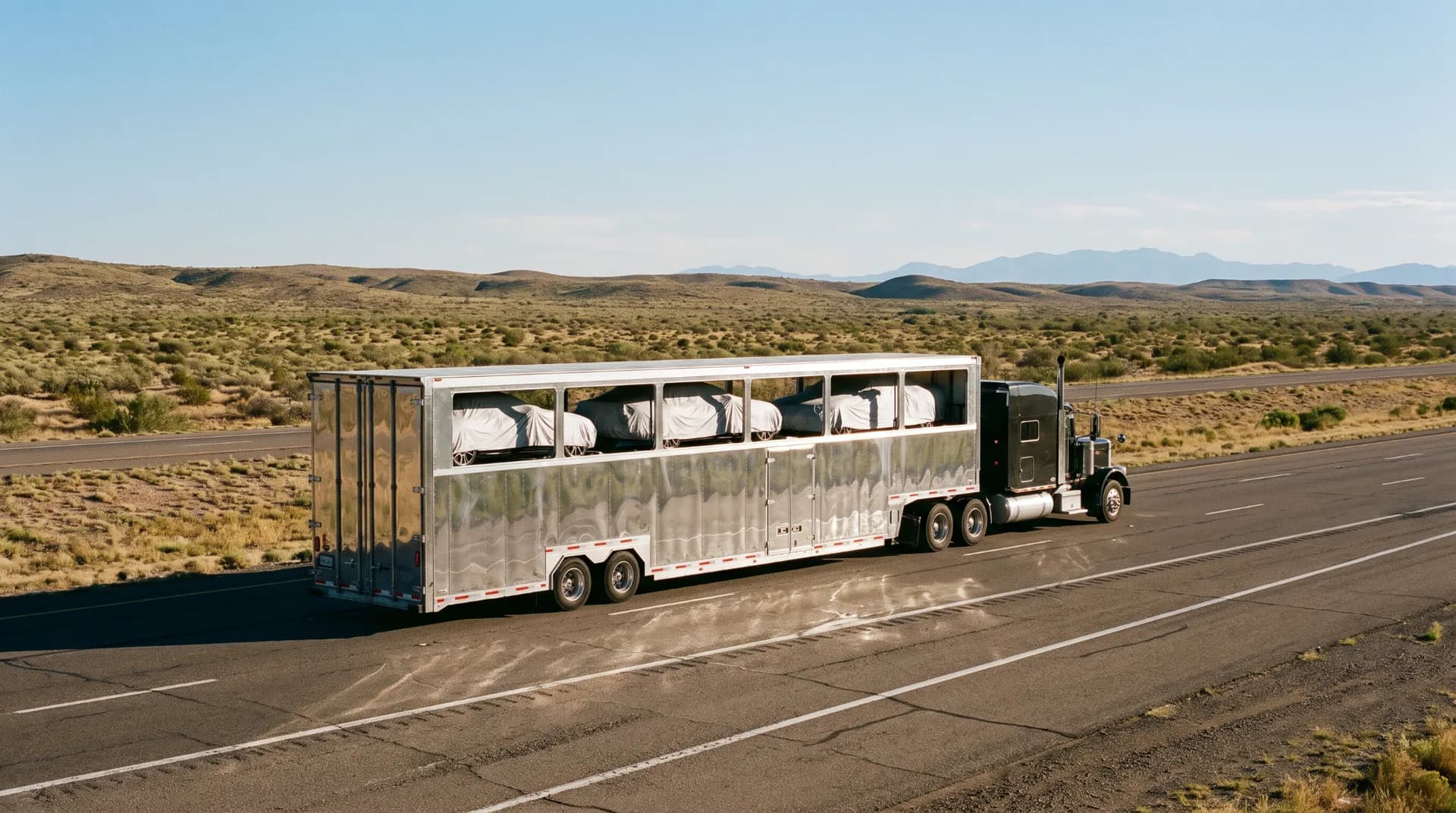
Shipping something valuable that far? A full week of highway grit is a real argument for enclosed car transport.
How it runs
What a cross-country booking looks like end to end
- 01
Price your coast-to-coast lane
Enter your pickup and delivery ZIP codes for a real long-haul rate you can check against the per-mile bands. It takes about 30 seconds, no card details, and the number locks for 14 days.
- 02
We assign a long-haul carrier
We match your car to an insured carrier already running your cross-country lane, verify its cargo policy, and send you the certificate before pickup. You pay nothing until that carrier is dispatched.
- 03
Driver plans the multi-day route
Your driver calls at least 24 hours ahead to set pickup, then runs the multi-stop route at about 500 miles a day. Door-to-door is included at both ends, as close as the truck can legally reach.
- 04
Track it across the country
You and the driver photograph and sign the Bill of Lading at loading. Your coordinator texts status on request across the whole haul, with photo proof again at delivery before you sign off.
Questions
Cross-Country Car Shipping: common questions
Still stuck? A coordinator answers the phone Mon–Sat, 9am–7pm ET.
How much does it cost to ship a car cross-country?
A coast-to-coast open shipment for a running sedan typically runs about $1,500 to $2,500, roughly $0.50 to $0.75 a mile past 1,500 miles. Real examples include New York to Los Angeles at $1,516 to $2,478 and New York to Seattle at $1,600 to $2,300. Your locked price comes from your exact ZIP pair.
How long does cross-country car shipping take?
About 7 to 10 days for a true coast-to-coast lane, because carriers cover roughly 500 miles a day under federal drive-time rules. Weather, the driver's other stops, and how remote your pickup is can shift it within that window. Your coordinator gives a realistic estimate for your specific route before you book.
Why is the per-mile rate lower for long distances?
The fixed costs of a load, the pickup, paperwork, and the miles to reach you, spread across far more miles on a long run, so each mile carries less of them. Short hauls run $1.00 to $1.50 a mile, while anything past 1,500 miles runs $0.50 to $0.75. Coast to coast is the most efficient distance a carrier moves.
Is it cheaper to ship or drive a car cross-country?
Shipping often wins once you count fuel, several nights of hotels, meals, and the wear of 2,800 miles on the vehicle. Driving also costs you three or four days of your time. Shipping lets you fly instead and hands the miles to the carrier rather than your odometer, though a short move can favor driving.
Should I choose open or enclosed for a cross-country move?
Open is the standard and the value choice, and it is fine for the vast majority of cars. Over 2,800 miles, though, the road grit adds up, so if the car is high-value, freshly painted, or a collector piece, the enclosed premium is easier to justify on a long haul than a short one. We will tell you honestly which fits.
Can I speed up a cross-country shipment?
You can speed up the pickup, not the drive. Expedited service secures a faster carrier commitment for a flat $200, but transit still runs about 500 miles a day because drive-time law caps it. If you have a firm delivery date, booking earlier is the reliable fix, since no fee makes a legal load cross the country faster.
Can I track my car on a cross-country move?
Yes. Your coordinator texts you status on request, checked directly with the driver rather than a generic app, with photo proof at pickup and delivery. There is no live GPS dot, but on a long haul a real person can tell you which stretch of the route your car is on whenever you ask.
Ready to ship? See your cross-country price now
- Price locked 14 days
- $0 until a carrier is assigned
- One coordinator, direct line
or call (917) 594-5566. A person answers.