
Transport type
Enclosed Auto Transport
One scratch on the wrong car costs more than the shipping. Enclosed transport keeps yours sealed off from weather, road grit, and eyes, door to door.
Live carrier rates · ~30 seconds
Get your locked quote
- Route
- Vehicle
- Date & contact
Prefer a human? Call (917) 594-5566. A coordinator answers.
- $899
- starting price
- 30–50%
- more than open
- 2–6
- vehicles per trailer, never more
- 7–10 days
- coast to coast
The short answer
Open trailers expose your car to rain, gravel, and everyone on the highway. Enclosed doesn't. Your car rides inside a sealed trailer, untouched by weather or debris, for 30–50% more than open. Starting at $899, it's the go-to for classic, luxury, and low-riding cars that can't afford the risk.
Ever seen an open carrier fly down the highway, cars stacked two-high, getting pelted by everything the truck ahead kicks up? That's fine for a daily driver. It's not fine for a car you've spent years restoring, or one that turns heads every time it's parked. Enclosed transport skips all of that. Your car goes into a sealed trailer, the doors shut, and it doesn't see rain, road salt, or gravel again until it's back in your hands.
This is the upgrade people choose when a chip or a scratch isn't just cosmetic — it's money. Classics, exotics, low-clearance sports cars, anything worth more than the truck hauling it: this is their trailer. If that's not your car, open transport gets the job done for less. If it is, here's exactly what you're paying for.
What it costs
Enclosed auto transport cost
Same per-mile math as open transport, just at a higher rate — you're paying for a sealed trailer that carries fewer cars per trip. $1.00–$1.50 per mile on 500–1,500 mile lanes, 30–50% above the equivalent open rate.
Shared enclosed trailer · running vehicle · all lanes
$899 covers a short regional haul in a shared trailer. Most cross-state moves — say, New York to Florida — land in the typical range. The ceiling is coast-to-coast runs, dedicated single-car trailers, or a liftgate load. None of these ranges is your actual price; that comes from your exact ZIPs and vehicle, locked for 14 days once it's issued.
What moves the number
- Liftgate loading required
- adds cost
- Dedicated (single-car) trailer
- highest tier
- Distance under 500 miles
- $1.50–$2.50/mi
- Distance over 1,500 miles
- $0.75–$1.25/mi
$899 is real, not a teaser rate, but it's the floor for a short haul in a shared trailer. A liftgate, a dedicated trailer, or a long haul pushes you up the range, and your locked quote will say exactly where.
Your exact number takes about 30 seconds and no payment details.
See my priceLocked 14 days · $0 until dispatch
Hard vs soft-sided
Hard-sided or soft-sided: does it matter?
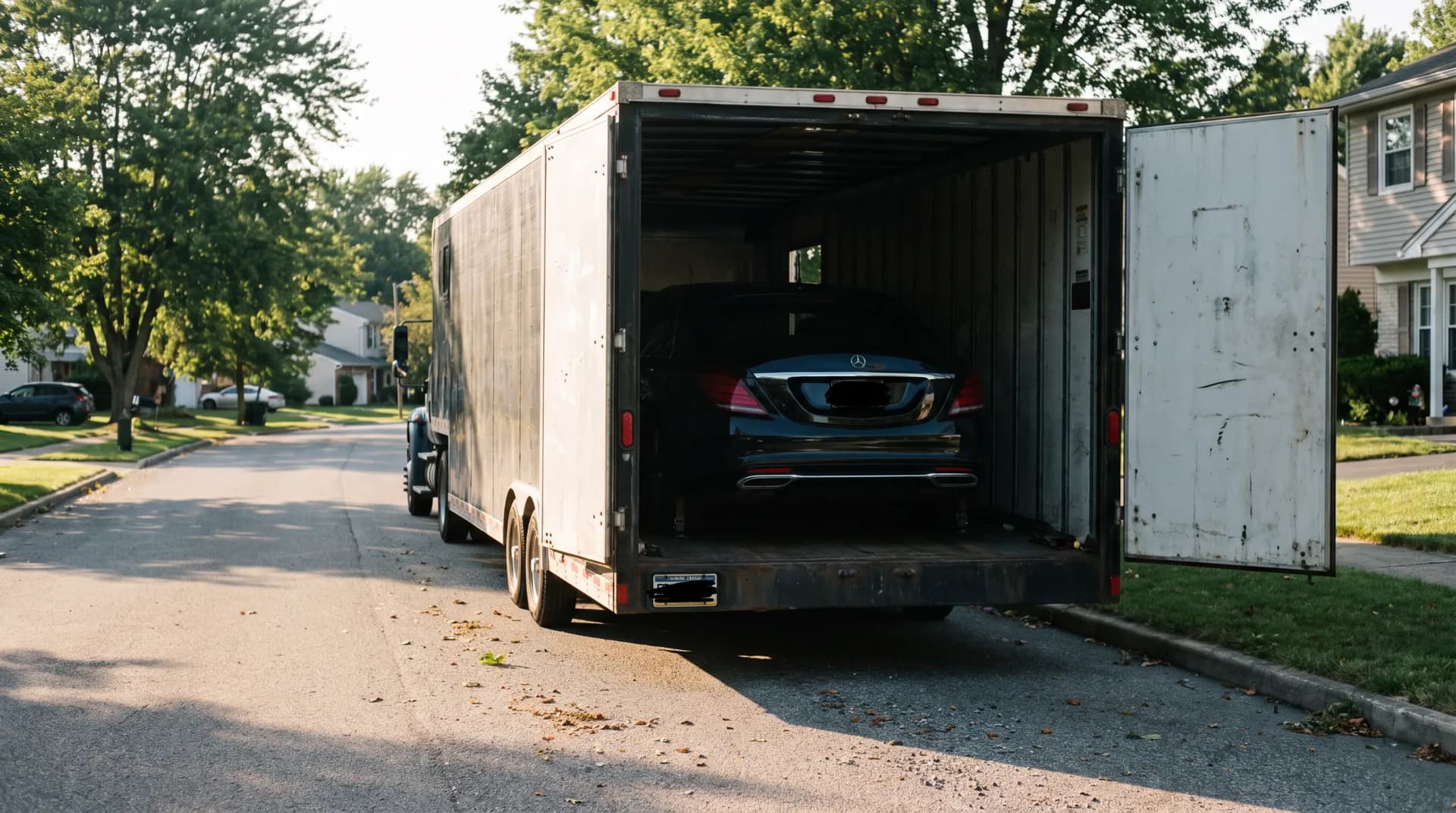
Yes — more than most brokers bother telling you. Hard-sided trailers are rigid aluminum or steel, built for the heaviest protection on the longest hauls. Soft-sided trailers use a tough fabric skin over a metal frame, still fully sealed against weather, just lighter, and usually cheaper.
Neither one is wrong. It's about matching the trailer to the car. A six-figure exotic on a 2,000-mile trip belongs on hard-sided. A daily driver dodging a rainy weekend on a short regional route does fine on soft-sided, often for less. Your coordinator picks the trailer to fit the car, not the other way around.
Hard-sided
- Structure
- Rigid aluminum/steel walls
- Weather protection
- Full
- Best for
- High-value, long-haul, extreme weather
- Relative cost
- Higher
Soft-sided
- Structure
- Fabric skin, metal frame
- Weather protection
- Full
- Best for
- Moderate-value, regional routes
- Relative cost
- Lower
Your coordinator picks the trailer to fit the car, not the other way around.
Loading a low car
Why some cars can't use a ramp
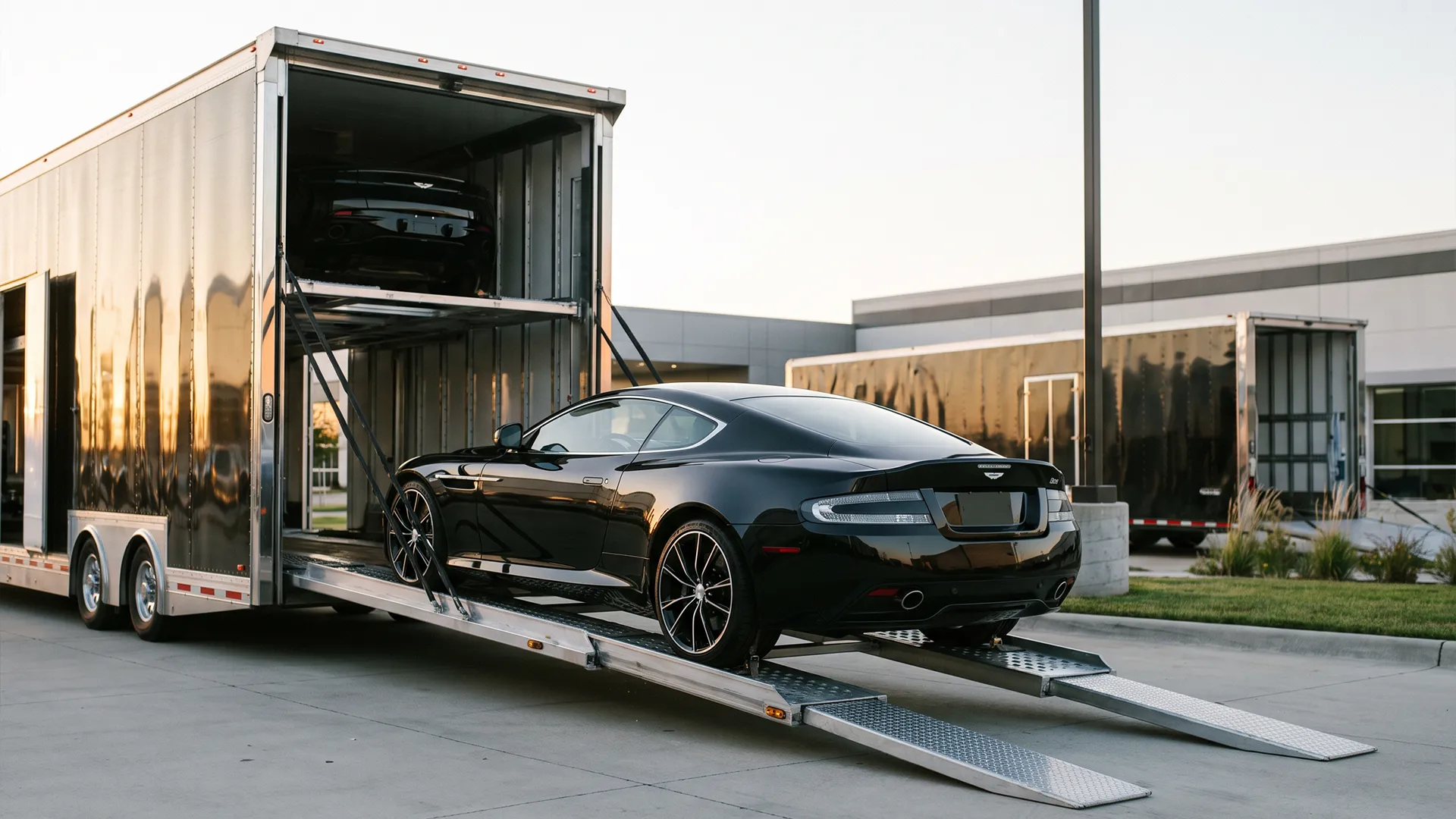
A standard ramp works fine — until your car's low enough that the incline scrapes the splitter, the exhaust, or the underbody before it even reaches the deck. That's the moment a liftgate stops being a luxury and becomes the only safe option.
A liftgate is a flat hydraulic platform. It drops to ground level, your car rolls on completely flat, then lifts up to the trailer — zero incline, zero scrape. It takes a little longer and needs a carrier built for it, which is why it costs more. If your car sits low, has lowering springs, or already scrapes your own driveway, tell your coordinator before booking. It changes which carrier gets sent.
ground clearance
where a ramp gets risky
incline on a liftgate load
the car rolls on flat
added per vehicle
what a liftgate costs in time
Capacity and coverage
How many cars ride with yours, and what actually covers them
Enclosed trailers carry 2 to 6 cars. Open carriers carry 8 to 10. That gap is the point — fewer cars means less handling, less risk, and a trailer built for care instead of volume. It's also why enclosed costs more per vehicle: you're paying for a smaller, more careful load.
Here's what most brokers won't walk you through: the carrier's cargo policy has one total limit for the whole trailer, and inside that, your car usually has its own per-vehicle sub-limit, which can be lower than the big number the carrier likes to advertise. Before your car goes anywhere, get the certificate and check the per-vehicle number against what your car is actually worth.
- Confirm the per-vehicle sub-limit, not just the total policy number
- Get the certificate in writing before pickup, never just a verbal promise
- If your car's value beats the sub-limit, ask about extra coverage before booking
Is it right for you
The honest version of this decision
Book it when
- Your car is a classic, restoration, or collector piece
- It's a luxury or exotic worth shielding from weather and eyes
- Ground clearance is too low for a standard ramp
- You're shipping in winter and want zero road salt exposure
Don't bother when
- Your car's a standard daily driver, nothing special to protect
- Budget matters more than weather protection
- It's a short haul in mild, dry conditions
- The car's already got some wear — a scratch won't move the needle
None of the reasons above sound like your car? Open transport gets it there just as safely for 30–50% less — see open auto transport.
How it runs
From quote to driveway
- 01
Get your locked quote
Enter your ZIPs and flag if your car needs a liftgate. Your rate locks for 14 days.
- 02
We match a specialized carrier
We assign a carrier running enclosed on your lane and confirm the per-vehicle sub-limit before dispatch.
- 03
Liftgate or ramp, your call
Flagged low clearance? Your carrier shows up equipped for it. No scraped splitters, no surprises.
- 04
Delivered exactly as it left
Zero weather exposure, photo proof at both ends, in your driveway.
Questions
Enclosed Auto Transport: common questions
Still stuck? A coordinator answers the phone Mon–Sat, 9am–7pm ET.
Is enclosed transport worth the extra cost?
If your car's a classic, exotic, or its value is tied to its condition, yes — the 30–50% premium buys real protection. For an ordinary daily driver, open transport is the smarter spend.
Why does enclosed cost more?
Fewer cars per trailer (2–6 instead of 8–10), full weather sealing, and often slower, more careful loading. Less volume per trip means a higher cost per car.
Does my car need a liftgate?
If your ground clearance is under roughly 4–5 inches, or you've got lowering springs or a front splitter, a ramp risks scraping the car. Tell your coordinator before booking.
How many other cars ride with mine?
2 to 6, nowhere near the 8 to 10 on an open carrier. Your coordinator can confirm the specific carrier's capacity at booking.
Is my car covered if another car in the trailer gets damaged?
Your car has its own per-vehicle sub-limit inside the carrier's total policy. We send the certificate before pickup so you can check that number yourself.
How much longer does enclosed take?
No longer at all — 7 to 10 days coast to coast, same as open. Enclosed adds protection, not time.
Can I request hard-sided over soft-sided?
Yes, and we'll match you when one's running your lane. It may cost slightly more depending on the route.
When is enclosed genuinely unnecessary?
No special cosmetic or collector value, a short haul, mild weather, and budget as the priority — open transport handles that just fine for less.
Ready to ship? See your enclosed transport price now
- Price locked 14 days
- $0 until a carrier is assigned
- One coordinator, direct line
or call (917) 594-5566. A person answers.