
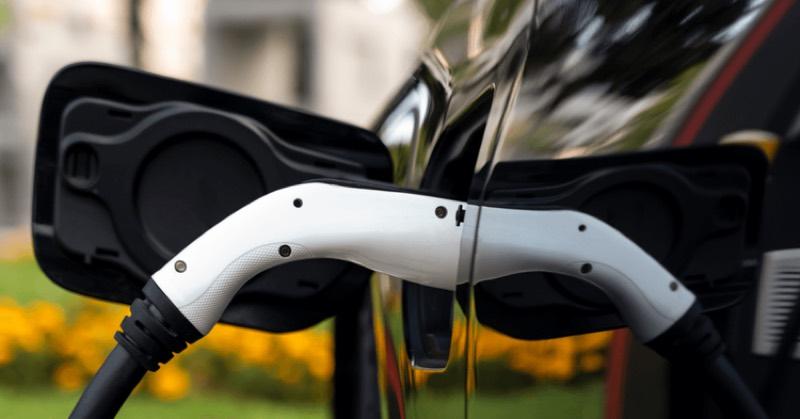
An electric car ships on the same carriers as a gas car, priced the same way by route and vehicle size, with door-to-door pickup included. Four things work differently, and you handle each of them before the driver arrives: how much charge is left in the battery, how much the car weighs, whether it can be put in a free-rolling mode, and where a winch cable can hook on. Everything below is what we ask EV owners to do today.
Leave about a quarter of the battery
We ask for roughly 25% charge at pickup. That covers driving the car onto the trailer and off again, plus any repositioning at stops along the route, with charge to spare for the days it sits on the deck while the car's own electronics keep drawing a little power.
Don't let it run close to empty. Tesla's owner's manuals say Tow Mode can only be turned on when the car has low-voltage power and detects a key, and that without that power you need an external supply even to open the hood or use the touchscreen. A car that arrives nearly dead can turn a routine drive-on into a winch job.
Tell us the exact model and trim
EVs weigh more than gas cars of the same size, mostly because of the battery. GM's EPA certification documents put the 2022 GMC Hummer EV Edition 1 pickup at 9,063 pounds, and an F-150 Lightning runs over 6,000 pounds in every trim.
Weight matters because a car carrier has a ceiling. On the Interstate system, federal law caps a truck's gross weight at 80,000 pounds, and the tractor, the trailer and every car aboard count toward it. A few heavy EVs on one load use up weight that would otherwise carry another car, so the carrier may leave with fewer cars. That is why we ask for the model and trim before quoting, and why a heavy truck or SUV can price above a sedan on the same lane. The curb weight is printed on the label inside the driver's door jamb if you're not sure.
Know the number before you plan around it
Route-exact price in about 30 seconds. No payment details, locked 14 days.
Find the free-rolling mode before pickup day
A running EV drives onto the carrier like any other car. Free-rolling mode matters when the car won't drive and has to be pulled on with a winch.
Tesla calls this Tow Mode (some older manuals say Transport Mode). It holds the parking brake off so the car can roll. Tesla's manuals say to turn Tow Mode on before winching the car onto a flatbed, and to use self-loading dollies or tire skates if the mode is unavailable or the touchscreen can't be reached. The manuals also limit the mode to slow, short moves, such as under 3 mph for under 30 feet in the Model S manual, so it is for loading and nothing else. A car carrier's deck loads the same way a flatbed does, so the same steps apply.
Rivian's tow operator guide for the R1T and R1S says to move those vehicles only on a flatbed, never with two wheels on the ground, and to keep the front wheels pointed straight during loading. Other makers use their own names and menu paths. Look up "towing" or "transport" in your owner's manual, then write the steps on a card and leave it on the seat for the driver.
If the car can't be put in a free-rolling mode at all, it doesn't pass the roll, brake and steer test we use for inoperable vehicle transport. That shipment needs specialty loading, so tell us the true condition before we quote. A non-running EV that does roll, brake and steer ships with the same flat $150 winch fee as any other car.
Show the driver where the tow eye is
Many EVs have no exposed tow hook. Tesla supplies a screw-in towing eye that threads into the front bumper, and on the Model Y it is stored in the front trunk. If the car has to be winched, that eye is where the cable attaches. Leave it in the car and tell the driver where it is.
This links back to charge level. If the low-voltage system is dead, the front trunk may not open without outside power, and the tow eye is locked inside with it.
Open or enclosed for an EV
Both work. An EV can ride on open auto transport, the multi-car trailers that haul 9 or 10 cars at a time, like any other car. A high-value EV, or one with low ground clearance, can ride in a sealed trailer. Enclosed car transport starts from $899 and runs 30 to 50% above open on the same route. EVs follow the same pickup and delivery steps as any car, so the inspection, photos and Bill of Lading all work the usual way.
Checklist for pickup day
- About 25% charge.
- A working key card or fob for the driver. Tesla's Tow Mode needs a key the car can detect.
- Camera and alarm modes off, including Tesla's Sentry Mode, so the alarm doesn't go off on the trailer.
- The tow eye in the car, and the driver told where it is.
- The charging cable is up to you. It counts toward the 100-pound personal items limit, and cargo insurance doesn't cover personal items.
- Any crash damage reported before booking. Tesla's manual says to treat high-voltage components as energized after a collision, and the carrier needs to know before it loads the car.
The rest of the prep is the same as for any car, and our guide to preparing your car for shipping covers it. To price your EV, enter the two ZIP codes and the model on the quote page.