
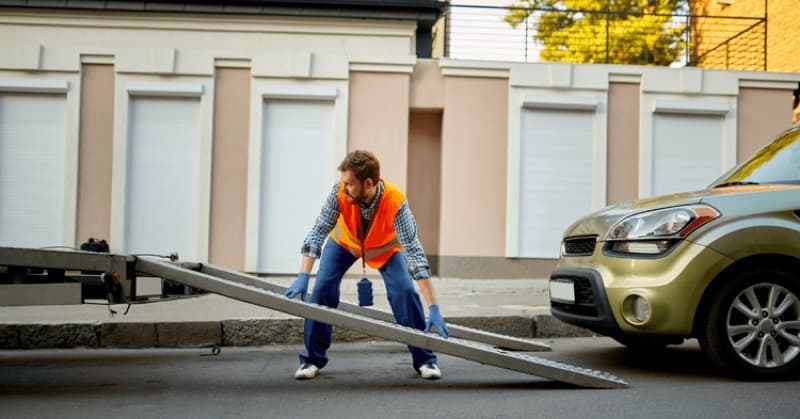
Your coordinator texts the pickup window the day before, and the driver calls about 24 hours ahead to set a time. That leaves one evening to get the car itself ready. This guide covers that evening only. It's about the car, what the driver checks on the walk-around, and the small things that cause delays at the curb. For personal items, see what you can leave in the car. For the full schedule from booking to delivery, see the car shipping timeline.
Start it, drive it around the block
The shipping agreement asks for an operable vehicle. In practice the driver needs to start the car, drive it up the ramp, and steer and brake it into position on the deck. Do a short drive the night before and listen for anything new.
A weak battery is a common surprise on a car that has been sitting. If the car has been parked for weeks, charge it or jump it the night before and let it run. If it won't start, or it starts but won't brake or steer, call your coordinator before pickup day. A non-running car that still rolls, brakes and steers ships for a flat $150 winch fee, and the carrier needs to know in advance so the right truck shows up. Our inoperable vehicle transport page explains what qualifies.
While you're under the hood, look at the ground where the car was parked. The agreement lets a carrier charge extra for, or refuse, a car that is leaking fluids. A drip that a shop can fix in an afternoon is better found tonight.
Fuel, charge and tires
Leave half a tank of fuel or less, the limit in the shipping agreement. That's plenty to load, unload and get to a gas station at the other end, and the cap exists because every gallon is weight on a trailer that is already carrying several other cars.
For an electric vehicle, charge to roughly a quarter of the battery and switch off any transport or valet mode your owner's manual describes. Tell your coordinator the model, since EV weight affects which carrier can take it.
Check tire pressure. A soft tire makes the car harder to load and to strap down, and the driver will notice it on the walk-around.
Know the number before you plan around it
Route-exact price in about 30 seconds. No payment details, locked 14 days.
Turn off what could go off
Disable the alarm, or leave clear written instructions for the driver on how to silence it. An alarm that trips at 2 a.m. in a truck stop can't be reached from the cab.
Remove the toll tag from the windshield. A transponder left in the car can be read at toll plazas the truck passes through, and the charges land on your account.
Take out the garage door opener and any parking or gate cards. They are small, easy to lose, and have no use on the truck.
Anything that sticks out or can come loose
Picture the car at 65 miles an hour on the top deck of an open trailer, then remove whatever wouldn't survive that.
- Fold in the side mirrors if they don't fold themselves.
- Retract or remove a mast antenna.
- Take off bike racks, cargo boxes and roof baskets.
- Secure loose trim, a cracked bumper cover, or a spoiler that is already lifting. The agreement lists unsecured components as a reason for extra fees or refusal.
- On a convertible, close the top and check the seals.
If the car sits low because of a body kit, lowered suspension or a long front overhang, tell your coordinator. A steep loading ramp can scrape a low nose, and the coordinator can match the car to a carrier set up for it if they know before dispatch.
Wash it and take your own photos
The driver inspects the car at pickup and records its condition on the Bill of Lading, which you both sign. Dirt hides chips and fine scratches, so wash the car the day before. A clean car makes the inspection faster and the record more accurate.
Then take your own photos in daylight. Get each panel straight on, all four wheels, the roof, the windshield, the interior, and the odometer. Keep the files with their timestamps. At delivery you'll walk the car against these photos before you sign anything.
Keys and access
Have one full set of keys ready for the driver, including any key for a locking gas cap or wheel locks. Keep your spare at home.
Stand on your street and look at it the way a 75-foot car hauler would. Low branches, a tight cul-de-sac, or a no-trucks sign mean the driver will meet you at a nearby lot. Pickup is still door-to-door, and the meeting point gets settled on the driver's call. If you already know your street is a problem, say so on that call and suggest a big parking lot nearby. Our door-to-door shipping page covers how those meetups work.
Plan for you, or an adult 18 or older you've named, to be there at pickup with ID to sign. If the car isn't ready when the driver arrives, the agreement allows a $100 rescheduling fee, and the truck moves on to its next stop without your car. An hour of prep the night before avoids both.