
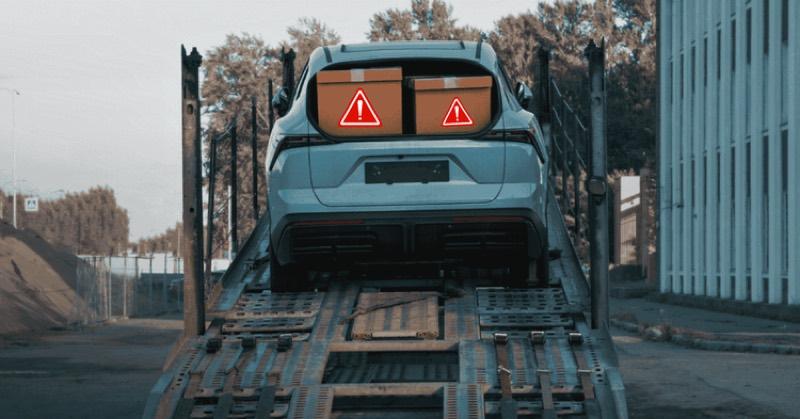
Yes, you can leave some things in the car, within limits that are written into the shipping agreement you sign. Here is the clause, word for word:
"Only personal belongings confined to the vehicle's trunk, weighing no more than 200 lbs and excluding heavy or hazardous items, are permitted. The carrier is not liable for damage caused by excessive or improper loading."
The same section adds that items left in the car beyond that travel at the shipper's sole risk and expense. Below is what each part of that means when you're packing, and the reason it's there.
Trunk only
The cabin should be empty when the driver arrives. That covers the back seat, the footwells and the front passenger seat. On an SUV or hatchback, the cargo area behind the rear seats serves as the trunk, so keep items below the window line there and under the cargo cover if the car has one. Three practical reasons sit behind the rule.
First, the driver inspects the interior at pickup and records its condition on the Bill of Lading. Boxes on the seats hide the upholstery, the dash and the door panels, so damage there can't be recorded at pickup or proven at delivery.
Second, the driver has to drive your car up the ramp, onto the deck, and off again at the other end. Bags in the footwell or a box blocking the rear window get in the way of doing that safely.
Third, a car on a carrier is strapped down by its wheels, and everything inside it rides the truck's braking and bumps over hundreds of miles. A loose box in the cabin can slide into a window or crack a trim panel. In a closed trunk it has far less room to move and nothing breakable to hit.
On an open carrier, anything visible through the glass also sits on display at every truck stop along the route. A closed trunk keeps it out of sight.
Up to 200 pounds, and lighter is better
The agreement caps belongings at 200 pounds, in the trunk. A carrier plans its load around what each car weighs, and a car with an extra few hundred pounds of books in it isn't the car the carrier planned for. The agreement also puts damage from overloading on the shipper. If the extra weight cracks a trunk floor or pushes a box into the back glass, the carrier isn't liable.
A quick way to check is to put your bathroom scale to work on each bag or box as you pack it. Two or three medium bags of clothes are well inside the limit. A trunk full of books, tools or weights is not.
Know the number before you plan around it
Route-exact price in about 30 seconds. No payment details, locked 14 days.
Nothing heavy or hazardous
Leave out anything that can burn, leak or explode. That includes gas cans, propane cylinders, camping fuel, paint, paint thinner and solvents, pool chemicals, fireworks, and spare car batteries. Leave out heavy loose objects too, like dumbbells, toolboxes and engine parts, which become projectiles under hard braking.
Factory equipment stays where it is. The spare tire, the jack, the floor mats and anything bolted in as part of the car don't count as personal items.
Your belongings aren't insured on the truck
The carrier's cargo insurance covers physical damage to your vehicle while it's in the carrier's care. It doesn't cover what's inside it. If a bag goes missing or a box of dishes breaks, the cargo policy won't pay for it, and neither will Broadway. Some homeowners and renters policies cover personal property away from home, so call your insurer if you plan to ship anything you'd want to claim for.
That's also why your own list of what's in the trunk is worth a minute. Photograph the open trunk at pickup alongside your photos of the car.
What to keep with you no matter what
Carry these in your luggage or on your person:
- Passports, titles, birth certificates and anything with your Social Security number
- Laptops, tablets, cameras and their chargers
- Prescription medication
- Jewelry, cash and keys to your new home
- Anything you couldn't replace, like photo albums or family papers
Take out the toll tag, garage door opener and parking passes as well. Our day-before prep guide covers those along with the rest of the car.
Common situations
Students. The car going to campus is the obvious place to put a dorm's worth of stuff. Pack the trunk with a duffel of clothes and bedding, then ship or carry the rest. Our college student car shipping page covers timing around move-in.
Military moves. A PCS move has household goods shipped separately, and that shipment is the place for most of what you own. Keep the car to trunk-only items. See military car shipping for how report dates fit the pickup window.
Snowbirds. A seasonal trip often means a trunk of clothes and a few household items for the second home. That fits the rule well if it stays in the trunk and under the weight. Our snowbird car shipping page covers the fall and spring rush.
Enclosed shipments. A car in an enclosed trailer is out of sight, but the agreement is the same. Trunk only, 200 pounds, nothing hazardous.
If you're unsure about a specific item, ask your coordinator before pickup day, or check the personal items answers in our help center.